Rexel buys GCG from Audax for ~$1.4bn, a French distributor bets on US data centres
Hussain Jeddy · 28 September 2026
Share on LinkedIn- Target
- GCG
- Buyer
- Rexel (Euronext Paris: RXL)
- Deal value
- EV c.$1.4bn
On 25 September 2026, Rexel agreed to acquire GCG from private equity firm Audax at an enterprise value of about $1.4 billion. Rexel says that equals less than 8x GCG's estimated 2026 EBITDAaL (earnings before interest, tax, depreciation and amortisation after leases, a profit measure that treats lease payments as a real cost), once expected cost savings are counted. The deal is expected to close by the end of 2026.
The Parties
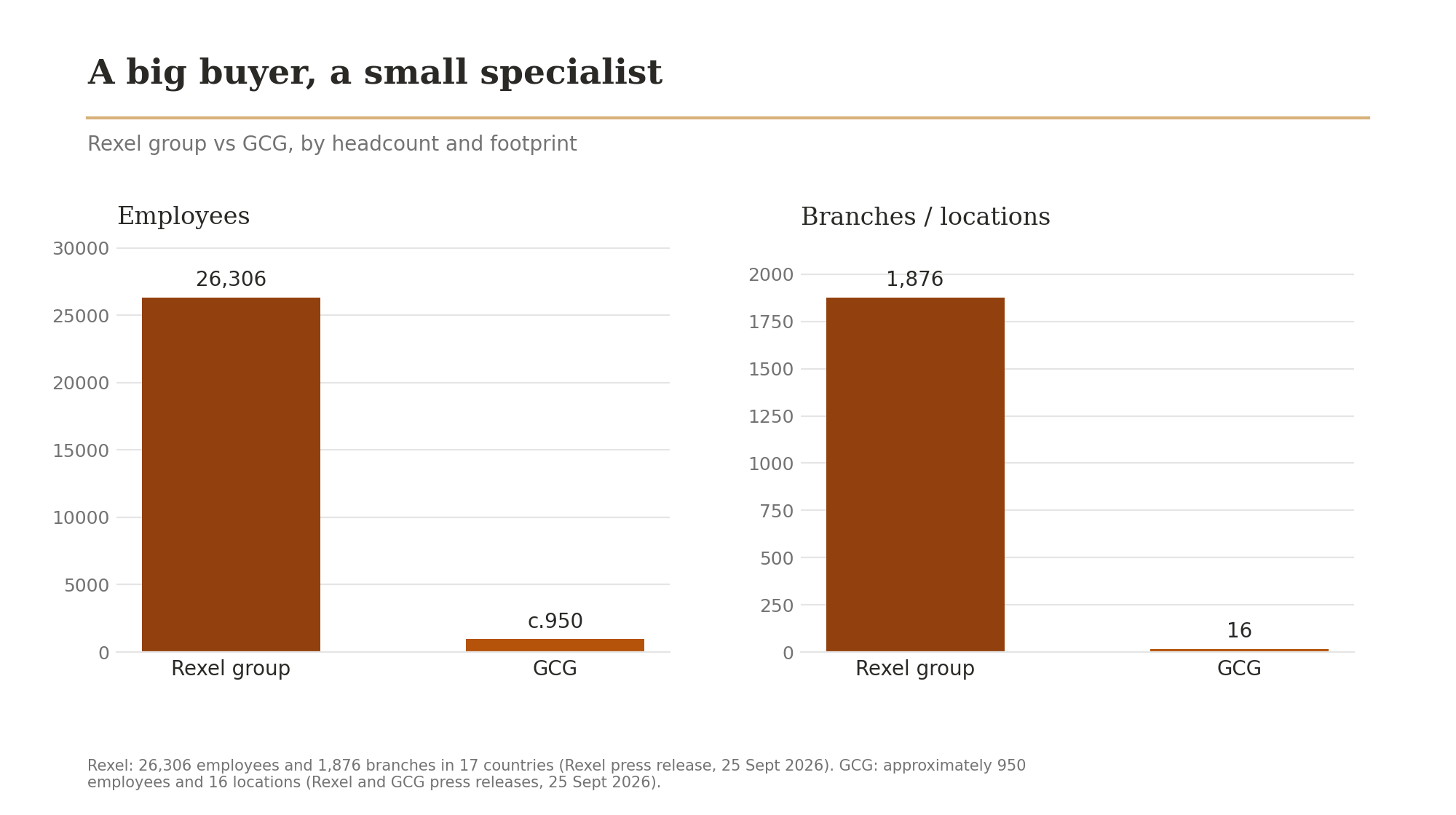
Rexel is a French-listed distributor of electrical products and services. It sells everything from cables to energy-management kit to contractors and industrial customers through 1,876 branches in 17 countries, with 26,306 employees and 2025 sales of €19.4 billion. GCG is a Chicago-based distributor of specialty wire and cable, connectivity and power products. It does more than resell. It also does engineering, custom cable assembly, product modification, kitting and testing. GCG has about 950 employees across 16 locations and expects more than $1.1 billion of revenue in 2026. Rexel says over 60% of that revenue comes from high-growth areas like data centres, power and grid infrastructure, defence and telecoms. GCG says it is a leading wire and cable provider to the US Navy. Audax is a Boston-based private equity firm with about $20.1bn of assets. It originally bought GCG as a carve-out (a business split off from a larger parent) of Genuine Parts Company's Electrical Specialties Group. It then grew GCG through add-on acquisitions such as United Wire & Cable, CableMaster and Allied Wire & Cable.
Structure & Process
This is a private-company sale from a PE owner to a strategic buyer. GCG isn't listed, so no public takeover rules apply. It's a negotiated purchase agreement between Rexel and Audax. The exact legal form (share purchase vs. asset purchase) isn't disclosed. A purchase of the holding company's shares from the PE fund is typical for this kind of exit, so treat "share purchase" as likely but unconfirmed. Rexel's board approved the deal unanimously. Closing depends on "customary regulatory approvals". The releases don't specify which, but a US HSR (Hart-Scott-Rodino, the US pre-merger antitrust notification) filing is the usual one at this size.
The Financing Angle
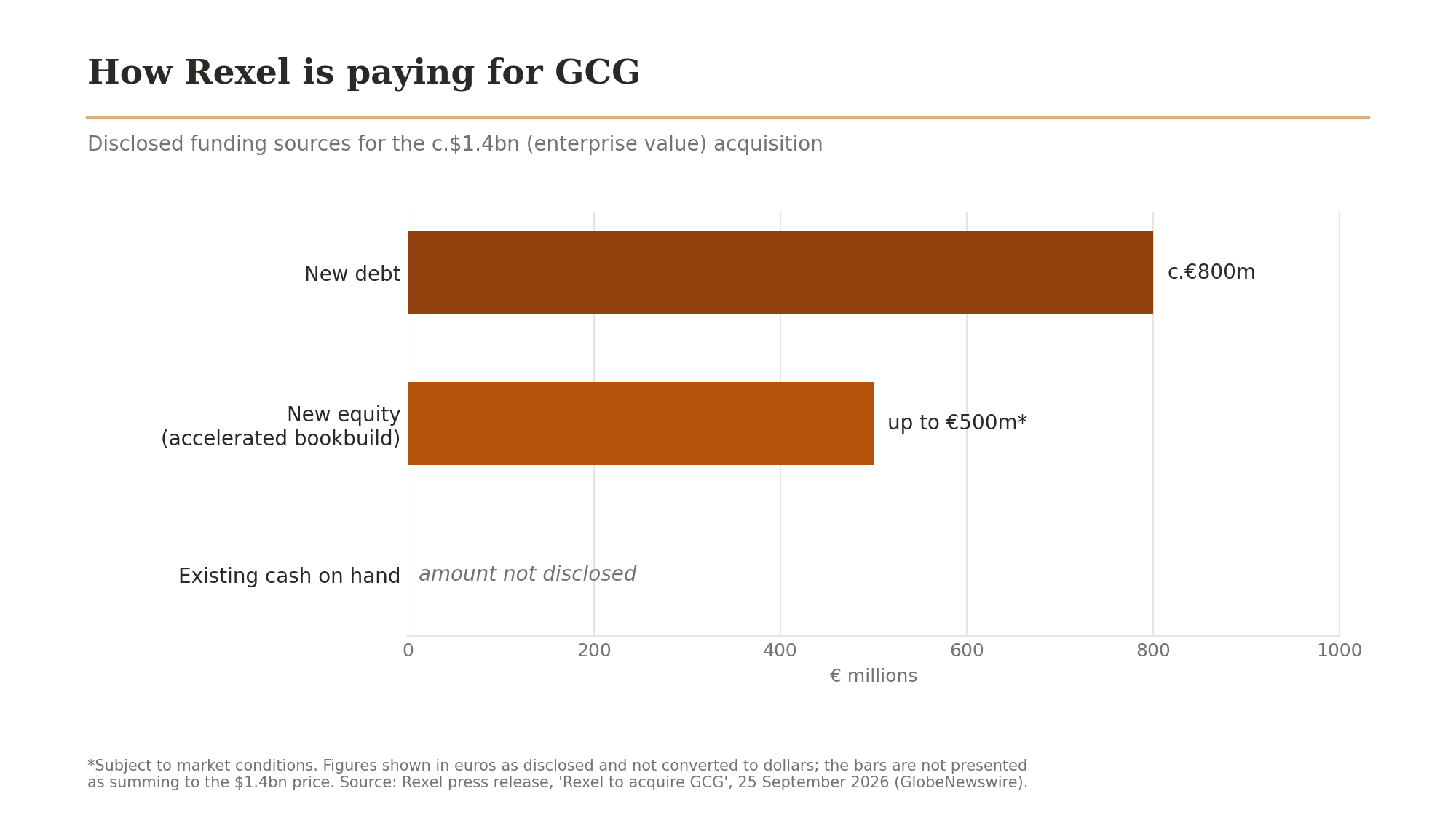
Rexel will pay using existing cash plus about €800 million of debt. It also plans to raise up to €500 million of new equity through an accelerated bookbuild (a quick, overnight sale of new shares to institutional investors, arranged by banks), "subject to market conditions". Rexel says the equity raise is meant to protect its credit rating and bring net debt back to about 2x EBITDAaL from 2027. The lenders and the law firm advising on the financing haven't been named. Sidley's deal team does include Global Finance lawyers, but their exact role isn't specified.
Why it Matters
This is another deal driven by the AI and data-centre build-out. Rexel is paying for exposure to the cables, connectivity and power gear that data centres and grid upgrades need. It sits alongside other recent "electrification" deals the site has covered, such as SLB/Kelvion (Issue 37), Madison Air/ebm-papst (Issue 28) and Softcat/GDT (Issue 52). On the same day, Eaton also agreed a smaller €810m deal for COL Group, again pitched at data-centre and utility demand. It's also an example of a PE exit to a strategic buyer, and of a listed buyer funding a deal with a debt-plus-equity mix to protect its credit rating.
Real-World Impact
Most people never think about the wiring inside data centres, power grids and navy ships, but demand for it is surging. For GCG's roughly 950 staff, a new owner could mean investment and growth, since Rexel is buying for expansion. But Rexel also says it expects "cost synergies" through "logistics optimization, insourcing and select efficiencies." That could mean some overlapping roles or sites are cut, though no layoffs have been announced. For customers such as data-centre builders, utilities and contractors, a bigger combined distributor might mean more reliable supply, or might mean less choice and pricing power in niche cable markets. The bigger picture is the policy debate over whether grids and supply chains can keep up with AI-driven electricity demand. Deals like this are one way private capital betting on the answer.
Why they did it this way