Priority Technology taken private by CEO-led investor group for ~$1.6bn
Hussain Jeddy · 24 September 2026
Share on LinkedIn- Target
- Priority Technology Holdings, Inc.
- Buyer
- Investor group led by Thomas Priore
- Deal value
- ~$1.6bn EV
- Price/share
- $8.05 per share, all cash
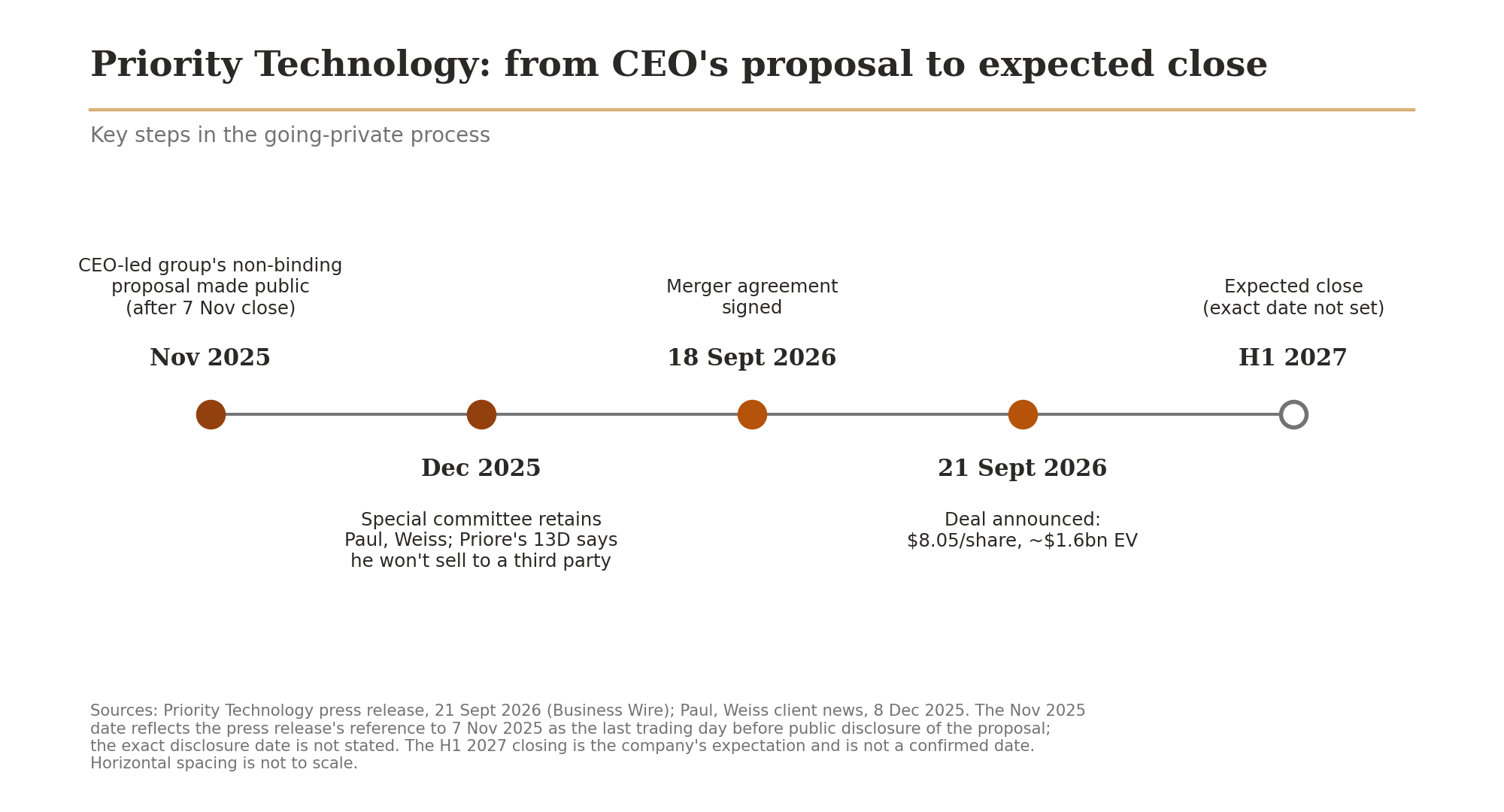
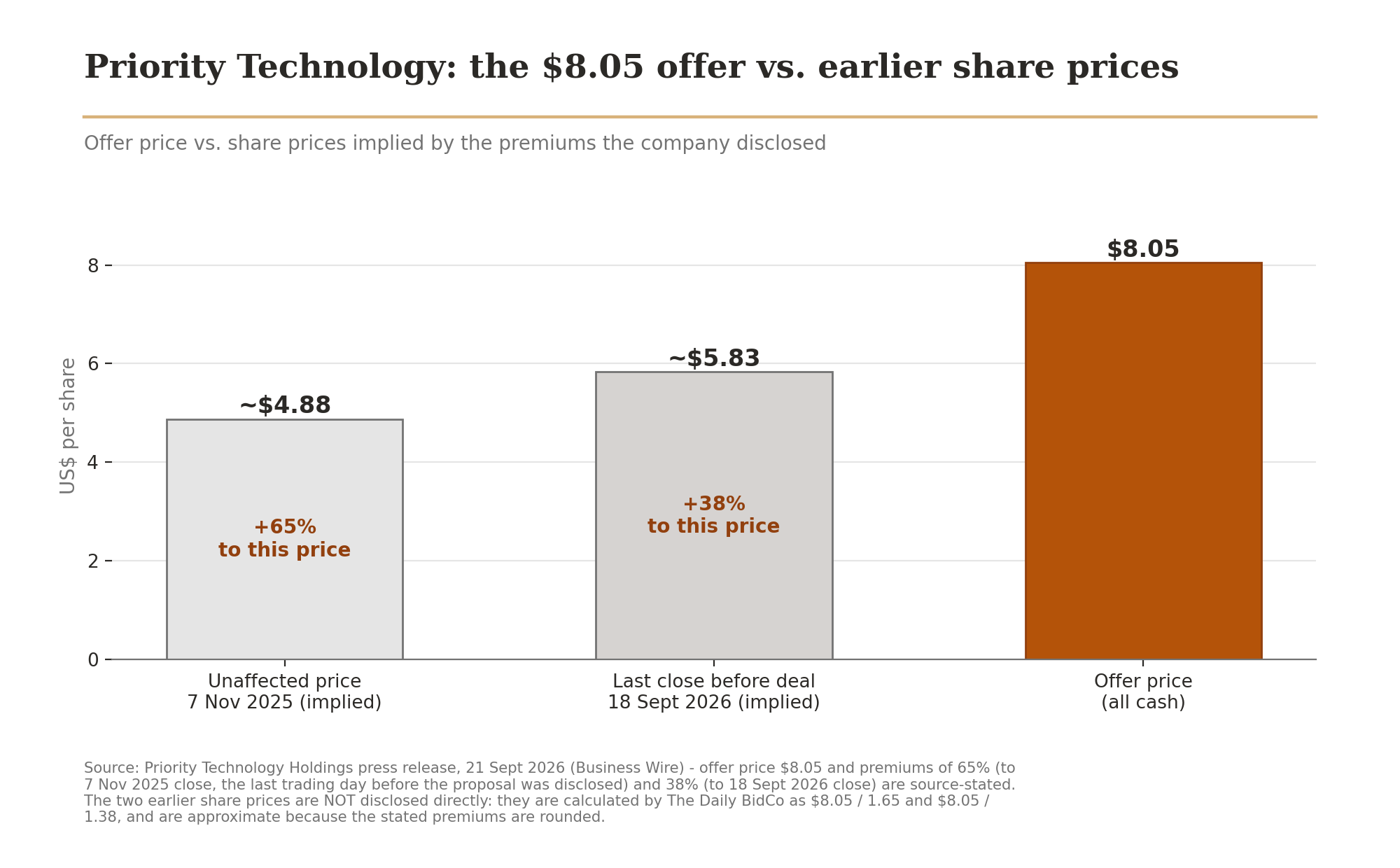
On 21 September 2026, Nasdaq-listed payments company Priority Technology agreed to be taken private by a group led by its own Chairman and CEO, Thomas Priore. Public shareholders will receive $8.05 per share in cash, giving the company an enterprise value of about $1.6 billion.
The Parties
Priority describes itself as a payments and banking provider for businesses. It runs a single platform covering payables (paying suppliers), merchant services (card acceptance for shops and businesses) and banking and treasury tools. Thomas Priore is both Chairman and CEO and already owns part of the company. Searchlight Capital Partners is a private investment firm with about $17bn under management and offices in London, New York, Miami and Toronto. It is providing part of the equity.
Structure & Process
This is a US going-private merger in which a company insider is the buyer. That triggers a Rule 13e-3 transaction statement (the SEC's "going private" disclosure regime for deals involving affiliates). The board set up a special committee (a group of independent directors with no ties to the buyer, set up to negotiate on behalf of outside shareholders) in late 2025 to review Priore's preliminary proposal. The deal needs approval from a majority of shares not affiliated with the Investor Group (a "majority-of-the-minority" condition, meaning outside shareholders get their own separate vote). It also needs regulatory approvals, which the risk factors say relate to state money transmitter licences (state-level permits needed to move customers' money).
The Financing Angle
Equity commitments from Searchlight-advised funds are financing part of the deal. The deal is not subject to any financing condition (the buyer cannot walk away just because its funding falls through). TD Securities is placement agent to the Investor Group. No debt financing or lenders are disclosed.
Paul, Weiss is listed counsel to the Special Committee, McDermott Will & Schulte are the counsel to the Investor Group, Nixon Peabody are counsel to the Company, and Latham & Watkins are legal counsel to Searchlight.
Why it Matters
It is a standard case of the conflict built into management buyouts. The CEO knows the business best and is also the buyer. The special committee, majority-of-the-minority vote and "no third-party sale" disclosure are the main protections for public shareholders in these deals. It is also another US fintech leaving the public markets. The release says the buyer group wants to pursue "Connected Commerce" as a private company.
Real-World Impact
If you run a small business that takes card payments, companies like this sit between you and your money. Priority processes payments and manages cash for businesses. Going private means it no longer reports results quarterly in public. Customers might not notice any change, or the new owners could push harder on product investment away from quarterly market pressure. No changes to pricing, staff or services have been announced. Each state has to approve (or accept workarounds for) money transmitter licences before the deal closes, however, which is a reminder that payments companies are regulated more like banks than like ordinary tech firms.
Why they did it this way